


In India, Ayurveda is considered a form of medical care, equal to conventional Western medicine and homeopathic medicine.
Ayurveda means “science of life” (Ayus: long life, Veda: science). As the name suggests, it is a broad area of health and life. It is the oldest and most complex Indian medical system, which has influenced all forms of medicine over time.
Ayurveda is closely linked to the healthy principles of life, the prevention of diseases, and the identification of their subtle causes.
Unlike modern medical systems, Ayurveda is a concept of life that aims to cure diseases and tries to find a complete answer to the question of the meaning of life while bringing the man in harmony with nature.

The cause of diseases, from an Ayurvedic perspective
Every human being is endowed by nature with a quantity of will to distinguish between convenient and uncomfortable, between healthy and harmful. The human body gives us all the necessary answers in the form of signals, which we listen to more or less.
Ayurveda believes that the habits and behavior of a normal person are determined by his subtle desires and which are present in the brain. Thus programmed, the brain usually insists on their fulfillment, despite the physical damage to the body, and as such often uses the body to achieve the desires transmitted.
Therefore, most diseases come primarily mentally, before they manifest in the physical plane. They arise in our restless minds, which are full of misconceptions. The mind wants everything, less health.

What are the principles on which Ayurveda is based?
According to Ayurvedic beliefs, just as everyone has a unique imprint, each person has a distinct pattern of energy, a specific combination of physical, mental, and emotional characteristics.
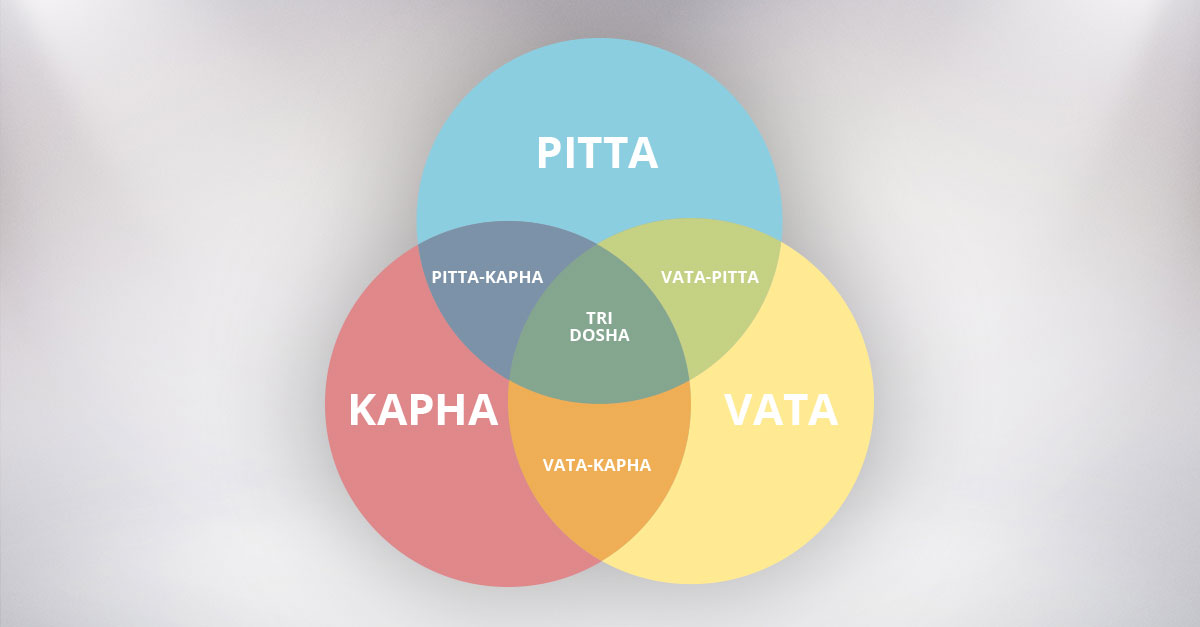
In Ayurveda, everything is made up of five elements: earth, water, fire, air, and space – including the food we eat. A central role in Ayurvedic teaching on health and nutrition is played by the three energies called ‘Doshas’, which influence the human body.

The three energies are:
- Vata– is the energy that controls bodily functions associated with movement, including blood circulation, respiration, and heartbeat. When Vata’s energy is balanced, there is creativity and vitality. Without balance, Vata produces fear and anxiety. Vata individuals are weak, delicate, agitated, and prone to sleep disorders. They need warm, regular meals and plenty of fluids. It is also recommended to avoid very spicy dishes.
- Pitta – is the energy that controls the body’s metabolic systems, including digestion. In balance, Pitta leads to contentment and intelligence. Without balance, Pitta can cause ulcers and anger. Pitta individuals are more sensitive, predisposed to skin diseases. They are advised to pay extra attention to alcohol and coffee consumption and avoid spicy and oily foods. They have an increased tolerance to sweet and bitter foods.
- Kapha –it is the energy that controls power and immunity. Provides water to all parts of the body, moisturizes the skin, and maintains the immune system. In balance, Kapha is expressed as love and forgiveness. Without balance, Kapha leads to insecurity and envy. Kapha individuals have strong structures. They love spicy foods, are gourmets, have slower digestion, and are not big fans of exercise. They are advised to avoid fatty, fried foods, sweets, and dairy products.
So Ayurveda focuses not only on the symptoms but especially on the causes of psychosomatic imbalances, which precede each disease. A symptom is seen as a warning sign or that there is something wrong with our body.
Thus, by the principles of a healthy lifestyle, Ayurveda seeks to restore the natural state of harmony in the human body, which is manifested through physical and mental health.

